Chapter 1: The Door That Interviewed Her
Nora Quill had been rejected by six libraries, three archives, one historical society, and a man who ran a private collection of nineteenth-century agricultural pamphlets out of a converted barn and still had the nerve to call her experience insufficient.
The pamphlet man had said, with the apologetic firmness of someone who enjoyed being regrettable, that she lacked practical exposure to hay-related ephemera.
Nora, who had a master's degree in library science, a certificate in rare-book handling, two years of unpaid internships preserved in her memory like fossilized humiliation, and a talent for finding mis-shelved volumes by smell and moral suspicion, had thanked him for his time and gone home to eat cereal for dinner over the sink.
That had been Tuesday.
By Friday morning she was standing in front of a narrow brick building on a narrow side street in Burlington, holding a tote bag full of resumes she no longer trusted and trying to decide whether the brass plaque beside the door was reassuringly discreet or actively unwell.
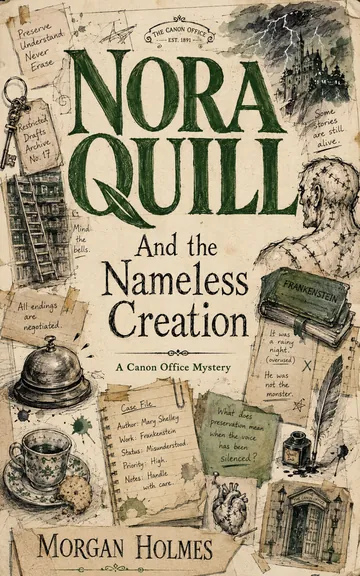
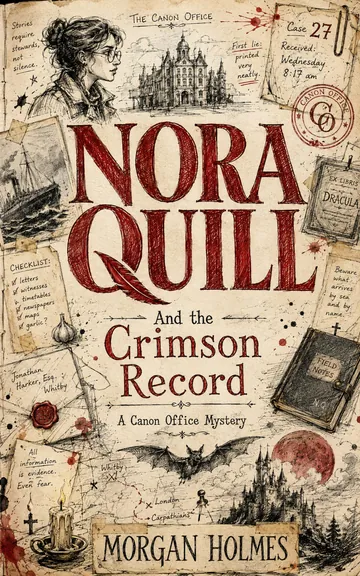
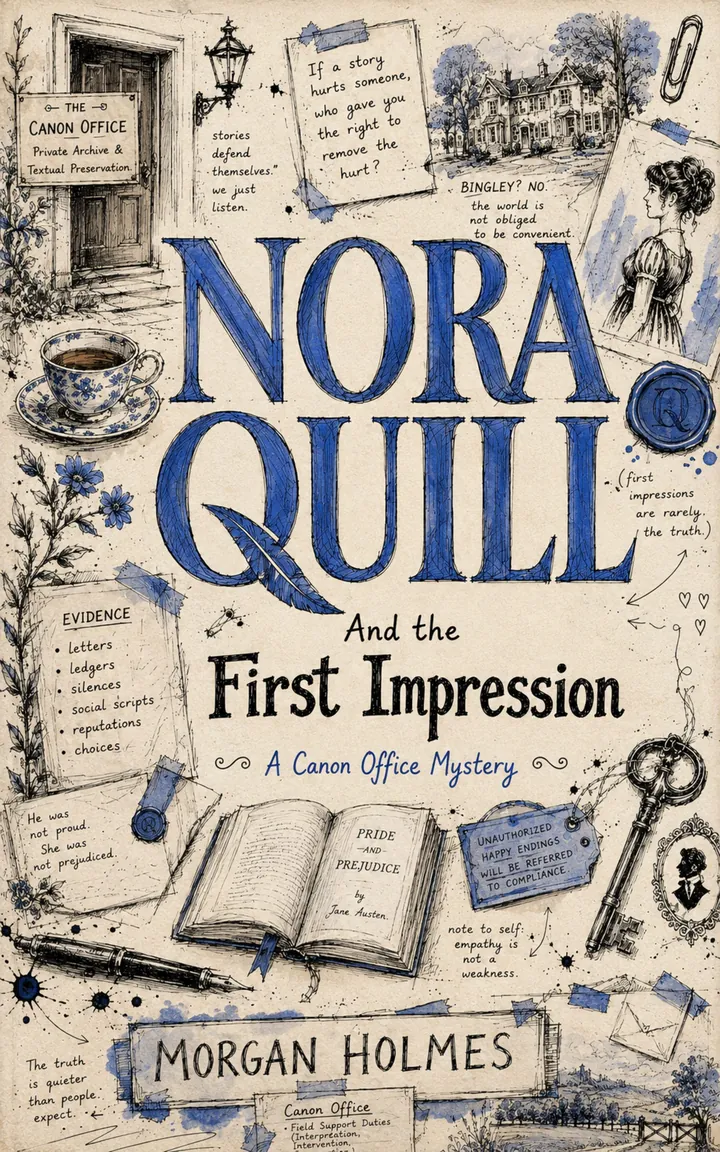
THE CANON OFFICE, it read.
Private Archive and Textual Preservation.
Appointments Only. No Donations. No Anthologies.
The last line gave her pause. It had the chilly specificity of a rule written after bloodshed.
The plaque had a second line underneath, so faint that Nora did not see it until rainwater slid across the brass and darkened the engraved letters.
UNAUTHORIZED HAPPY ENDINGS WILL BE REFERRED TO COMPLIANCE.
She stared at it for long enough that a woman passing behind her slowed, considered the building, considered Nora, and chose the other side of the street. Sensible woman. Nora might have joined her if the email in her pocket had not contained the words field support duties, which sounded like a job only if one had been unemployed long enough to develop a generous relationship with danger.
A page slipped from under the door before she touched the handle. Not ordinary stock. Too heavy. Too cold. It bore her name, her appointment time, and a single question: If a story hurts someone, who gave you the right to remove the hurt?
Nora checked the wet street. No one appeared to be watching, which in her experience meant either no one was watching or someone had a very literary sense of timing.
She picked up the page. The ink rearranged itself.
Second question: If you do nothing, who pays for your restraint?
"This is an interview," Nora told the door. "Not an ethical ambush."
The door, black and glossy and faintly annoyed, remained silent. But the page warmed in her hand, and for one irrational second Nora felt that whatever waited inside had already read every answer she would give and found them insufficient.
A June rain softened the street behind her. Cars hissed over wet pavement; a cyclist swore at a delivery truck; a coffee shop across the road steamed cheerfully in a way that made Nora feel underemployed on a cellular level. She checked the email again on her phone, although she had already read it fourteen times.
Dear Ms Quill,
Your application has been reviewed. Please present yourself at 9:00 a.m. Friday for an interview concerning junior archival and field support duties. Bring identification, a writing sample, and an attitude toward narrative ambiguity.
No late arrivals. No early arrivals. Do not enter if the door is blue.
Regards,
Agatha Pembroke
Director of Case Preservation
The door was not blue. It was black, glossy, and faintly annoyed.
Nora put her phone away, smoothed the front of her rust-colored cardigan, failed to smooth her hair, and opened the door.
A bell rang overhead. It did not tinkle. It delivered a small, grave verdict in miniature.
At first, the waiting room resembled the sort of place a private archive might invent to flatter donors: deep shelves, brass lamps, green-shaded reading lights, chairs upholstered in faded cranberry, a table bearing back issues of literary journals arranged by severity. The air smelled of old leaves, rain-wool, lemon polish, and tea strong enough to count as an institutional philosophy.
Then the books began rearranging themselves.
Not dramatically. Nora would have preferred dramatic. Dramatic had rules. Dramatic allowed a person to scream and point.
This was administrative.
A slim blue volume slid from the second shelf, crossed the air with the weary efficiency of a file clerk, and settled on the table in front of her. Its spine read: THINGS NORA QUILL SHOULD NOT HAVE SAID IN FACULTY MEETINGS.
Nora stared at it.
"No," Nora said to the room. "Absolutely not. I prepared for interview anxiety, not a hostile finding aid."
A fat red volume landed open on the table, displaying the paragraph from Nora's last cover letter in which she had claimed to thrive in fast-paced environments. Beneath it someone had penciled: Evidence disputed.
"That is private correspondence," Nora told the table.
The red volume turned a page by itself.
Her writing sample, folded in her tote, rustled with secondhand embarrassment.
Nora gripped the strap of the bag and considered leaving. The rain whispered against the glass. The brass clock above the reception desk ticked toward nine, each second polite and prosecutorial.
She needed work.
More than that, she needed a room where her noticing things was not treated as a charming inconvenience. She needed shelves that believed in order, even if these particular shelves were making a case against her.
So she sat.
The chair accepted her with a sigh.