Chapter 1: The Bakery Under the Mosaics
By the time Caterina Bellini reached Monreale, the afternoon had turned the cathedral gold into something almost indecent.
It spilled from the apse in broken flashes whenever the great doors opened for a group of tourists. It trembled on the glass of the souvenir shops and on the scooters shouldering their way through the narrow street. It caught in the white dust over the lemon crates outside the market and settled, with irritating beauty, on the sleeve of Caterina’s black dress.
She had worn the dress to Rosalia’s funeral in Rome three days earlier, then on the train to Naples, then on the ferry, then on the bus that had climbed from Palermo with all the patience of an elderly goat. By now it had lost any claim to mourning and had become a travel document: creased at the waist, powdered with the island, and faintly perfumed with espresso from a paper cup that had betrayed her somewhere near Termini.
Her aunt would have noticed the stain first.
“You see?” Rosalia would have said, touching the air beside the offending mark but never the mark itself. “This is why grief should not travel second class. It arrives looking like a bad decision.”
The thought came so clearly that Caterina stopped under the cathedral steps and had to let a German tour group divide around her like water around stone.
She had expected to feel many things on returning to Monreale after eighteen years: irritation, duty, perhaps the mild embarrassment of the relative who appears only when someone dies and there is property to discuss. She had not expected to miss Rosalia with such physical inconvenience. It sat behind her ribs, a folded thing.
The bells began at five. Not the polished performance bells that Rome gave to tourists, but a nearer, rougher sound, one that seemed to strike the air from inside the hill. Pigeons lifted from the roofline. A child cried out and laughed. Caterina lifted her suitcase over a gutter and turned toward Via delle Cucine, where the notary had promised she would find the bakery.
It was not yet, to her annoyance, closed.
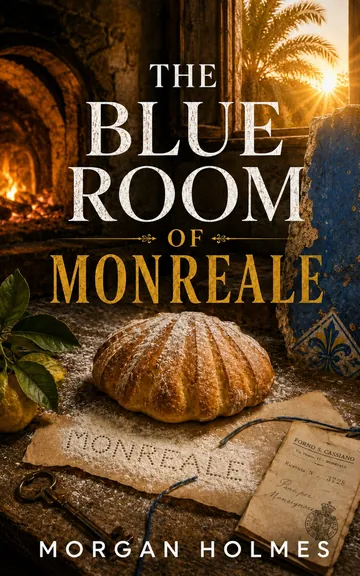
A striped awning sagged above the door. The painted sign read Rosalia’s in a green so sun-faded it had become an argument with itself. Behind the glass, trays sat empty except for a dusting of sugar and one lonely almond biscuit shaped like a crescent moon. The door was locked, but a woman in a flour-streaked apron was inside, standing with both hands on her hips as if she had been expecting Caterina to be late by exactly this much.
The woman opened before Caterina knocked.
“You are the niece,” she said.
“I am Caterina.”
“Of course you are. You have the Bellini forehead. Very useful for looking disappointed.” She stepped back. “Come in before Donna Lucia sees you standing there like a tourist with better shoes.”
Caterina looked down at her shoes. They were excellent shoes. They had also just lost a quiet battle with lemon dust.
“Maria Conti?” she asked.
“For twenty-seven years, though some mornings I think of resigning from myself.” Maria took the suitcase without asking and dragged it inside. “Rosalia said you were a restorer.”
“Mosaics. Mostly church commissions.”
“Then you are used to saints missing noses. Good. This place has similar problems.”
The bakery smelled of cold stone, old yeast, copper, and the ghost of almonds. Even shuttered, it had not gone still. A fly worried at the window. Somewhere in the back, metal clicked as it cooled. Light from the street fell across the tiled floor in narrow bands, revealing seams and repairs, little square interruptions where older stone pushed up through newer work.
Caterina stood just inside the threshold and did what she did in every damaged chapel, every half-lit apse, every scaffolded nave. She let her eyes stop wanting the whole.
The counter was late twentieth century, cheap wood dressed in varnish. The wall behind it was older, perhaps eighteenth century where the plaster had bubbled, perhaps medieval in the lower courses if the stone was what she thought it was. The ceiling beams had been scrubbed but not replaced. The arch into the kitchen was too low for modern convenience and too graceful for accident.
“This was not always a bakery,” she said.
Maria’s expression warmed by one degree, which on her face was practically a festival. “Former monastery kitchen. Before that, nobody agrees. In Monreale, when nobody agrees, it means everyone knows and nobody wants to pay for the permit.”
“The papers say commercial property, ground floor and courtyard.”
“The papers also say my height is five foot six because my doctor is kind. Come.”
Caterina followed her through the arch.
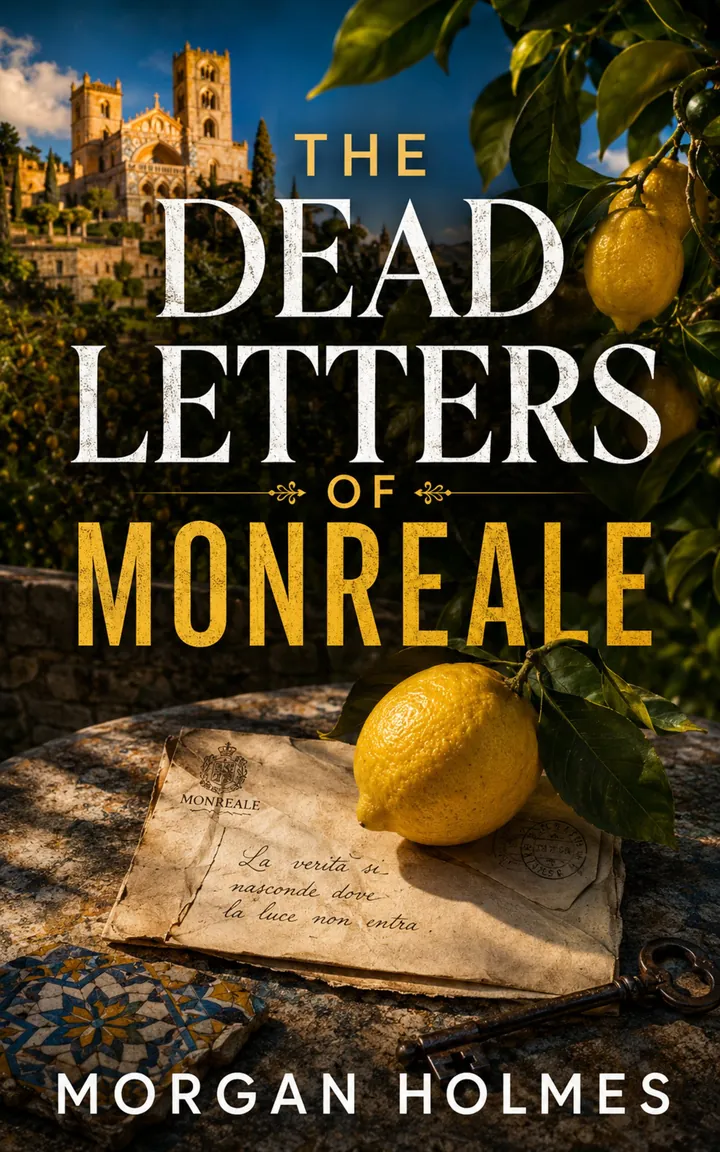
The kitchen widened unexpectedly, a cool stone room dominated by an old oven whose black mouth faced the worktables like a judge who had heard every excuse. Copper pans hung from iron hooks. Flour sacks leaned against the wall in white, slumped rows. On the far side, a small door opened onto a courtyard where a lemon tree grew in a square of exhausted soil, its leaves silvered with dust.
It should have been easy to dislike. It was impractical, layered, expensive to repair, and probably beloved by every municipal inspector in the province for all the wrong reasons.
Instead Caterina found herself imagining heat in the oven, trays on the tables, Rosalia’s hands moving among them. Her aunt had never baked in Rome except at Christmas, when she produced biscuits as if conducting a small legal proceeding. Exact weights. Exact timing. No improvisation unless she was the one doing it.