Chapter 1 · The Shell in the Flour
By seven in the morning, Monreale had already decided what Caterina Bellini's next grief ought to be.
It arrived with the bread queue.
Not openly, of course. Monreale did very little openly before espresso. The town preferred to tuck its curiosity into folded newspapers, lift it on the steam from coffee cups, and slide it across counters disguised as concern. A woman with a basket of oranges asked whether Caterina was sleeping better now that the truth about Anna had been corrected. A retired schoolmaster bought two cornetti and wondered, in the voice of a man merely arranging history for breakfast, whether the municipality would put up a plaque. A young mother, still wearing gym shoes and the harried expression of a woman betrayed by her own children before eight o'clock, whispered that her aunt had heard the dead letters came tied with black ribbon.
"They came with excellent timing," Maria Conti said, slamming a tray of almond biscuits onto the counter. "That is all anyone needs to know."
The young mother retreated with her biscuits.
Caterina lifted a sheet of scorched carta forno from the cooling rack and gave Maria a look. "That was not an answer."
"No. It was a service to civilization."
"Civilization wanted six cannoli."
"Civilization can come back when it has learned manners."
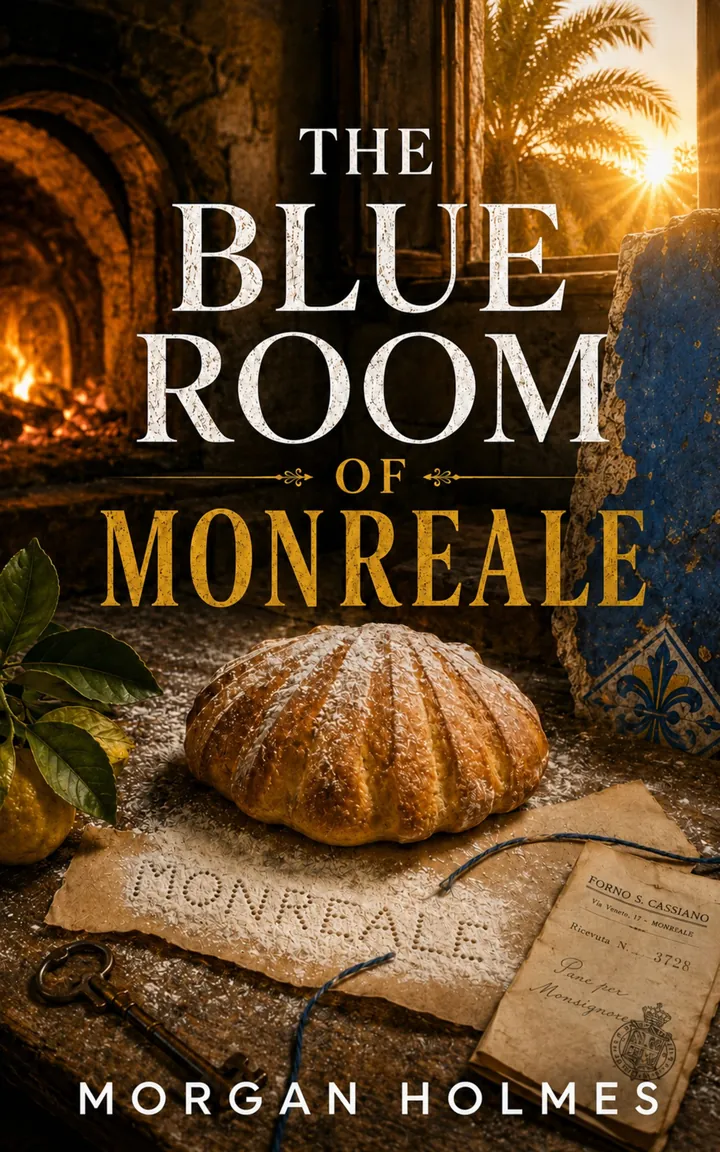
The bakery, formerly Rosalia's and now, by law and exhaustion, Caterina's, had never looked less capable of harboring miracles. Flour clouded the zinc table. The old oven gave off the steady heat of a creature that had opinions about everyone. Two crates of lemons leaned against the back wall, bright and accusing. On the shelf above the espresso machine, Rosalia's copper pot reflected the morning in one warped, rosy stripe.
The hidden letterbox behind the oven was silent.
Caterina had told herself she was grateful for that.
For three weeks after Enzo Vitale's murder and the public correction of the 1982 lie, the town had behaved like a house after a storm: shutters open, floors swept, everyone pretending not to see which rooms had flooded. Anna Bellini, Marco De Luca, and Sofia Rossi had been named with the solemnity Monreale reserved for saints, mayors, and family scandals no longer useful to deny.
Since then, people had come to the bakery as if truth might have a flavor.
They bought sfincione and cassatelle and bread still shining from the oven. They asked about Anna as if she had been a relative mislaid in a drawer. They wanted the dead letters to have ended the town's appetite for concealment while also providing new details at a pace suitable for morning conversation.
Caterina wanted ordinary work.
She wanted yeast that rose when expected, invoices that matched deliveries, and an hour in which no one said the word destiny while holding exact change. She wanted, with a force that surprised her, to learn the bakery's rhythms so thoroughly that grief would have to take a number and wait.
"The sesame loaves are pale," Maria said.
"They are not pale. They are restrained."
"Bread should not be restrained. Saints should be restrained. Husbands should be restrained. Bread should declare itself."
From the doorway, Peppe Amato cleared his throat. He wore a cap, a market jacket, and the bruised dignity of a man carrying too many tomatoes. "If anyone asks, I am here on business."
"You are here because Rosa's espresso machine broke and she threw you out," Maria said.
"That also is business."
Caterina signed for the tomatoes, accepted a bundle of basil she had not ordered, and refused to answer Peppe's question about whether the American tourists had started asking for the haunted biscotti. By nine, the queue had thinned to the regulars who bought bread without drama and gossip without admitting it. The cathedral bells rolled down the hill in three uneven peals. In the courtyard, the lemon tree trembled in the mild wind from Palermo.
For almost twenty minutes, the bakery was only a bakery.
Then Donna Lucia Martelli arrived too early.
She did not enter so much as permit the doorway to frame her. Small, erect, and dressed in a navy suit far too formal for a Wednesday morning, she paused on the threshold until everyone noticed the silver comb in her hair and the black kid gloves on her hands. Donna Lucia had the gift, rare and exhausting, of making silence seem like applause she had already earned.
"Caterina," she said.
"Donna Lucia."
"Maria."
"Lucia."
Maria put down the pastry bag. "If you have come to inspect my sfogliatelle, I warn you I am armed with custard."
"Custard is not a weapon. It is a confession." Donna Lucia approached the counter and studied the empty trays, the loaves, Caterina's apron, and finally the old oven. "Has the sea written again?"
The words passed through the bakery like a draft under a locked door.
Peppe, who had been arranging basil with unnecessary tenderness, suddenly found the tomatoes fascinating. Rosa Cammarata, entering with a broken espresso gasket in one hand, stopped so quickly the bell above the door rang twice.
Caterina wiped flour from her fingers. "The sea does not write."
"No," Donna Lucia agreed. "It keeps receipts."
Maria crossed herself with the speed of habit and annoyance. "Do not start before lunch."
"I have not started. I have asked."
"Ask the price of bread. Ask whether your nephew still owes me twenty euros. Ask why Peppe brings basil that looks like it has survived a small war. Do not ask the sea anything in my kitchen."