Chapter 1: The Contract in the Snow
Jane Carter distrusted any contract that arrived without a phone call.
It was one of the little rules she had developed during six years of corporate security work, along with never sitting with her back to a restaurant door, never accepting a flash drive from a man who called himself "more of a visionary than a manager," and never believing the words routine audit when printed in twelve-point Garamond on paper thick enough to stun a small animal.
The envelope had come by courier at 7:16 on a Tuesday morning, while New York was still gray and irritated with itself. Snow had begun in thin, accusing lines against the kitchen window of Jane's apartment, the kind of snow that did not commit to beauty and went straight for inconvenience. Her coffee machine clicked, failed, and clicked again. On the table sat an envelope the color of old bone, addressed by hand.
Miss Jane Carter.
Not Ms. Carter. Not Carter Risk Consulting, which was what the modest brass plate downstairs said. Miss Jane Carter, in ink so dark it looked wet.
Her mother had addressed envelopes that way when she was angry with institutions.
Jane disliked remembering that before coffee.
Jane stood in her socks and winter-black turtleneck, hair tied low at the nape of her neck, and considered the envelope with the expression most people reserved for unexploded devices.
"If this is a wedding invitation," Michael Hart said from her sofa, "I am going back to sleep in protest."
He had arrived after midnight with a damp scarf, a cracked phone screen, and a story he was writing about a museum board that had misplaced four million dollars and called it curatorial discretion. He had fallen asleep over his notes. Now he was awake enough to watch her, which meant awake enough to be trouble.
"It is not a wedding invitation," Jane said.
"You do not know that. Rich people have been known to use stationery as a weapon."
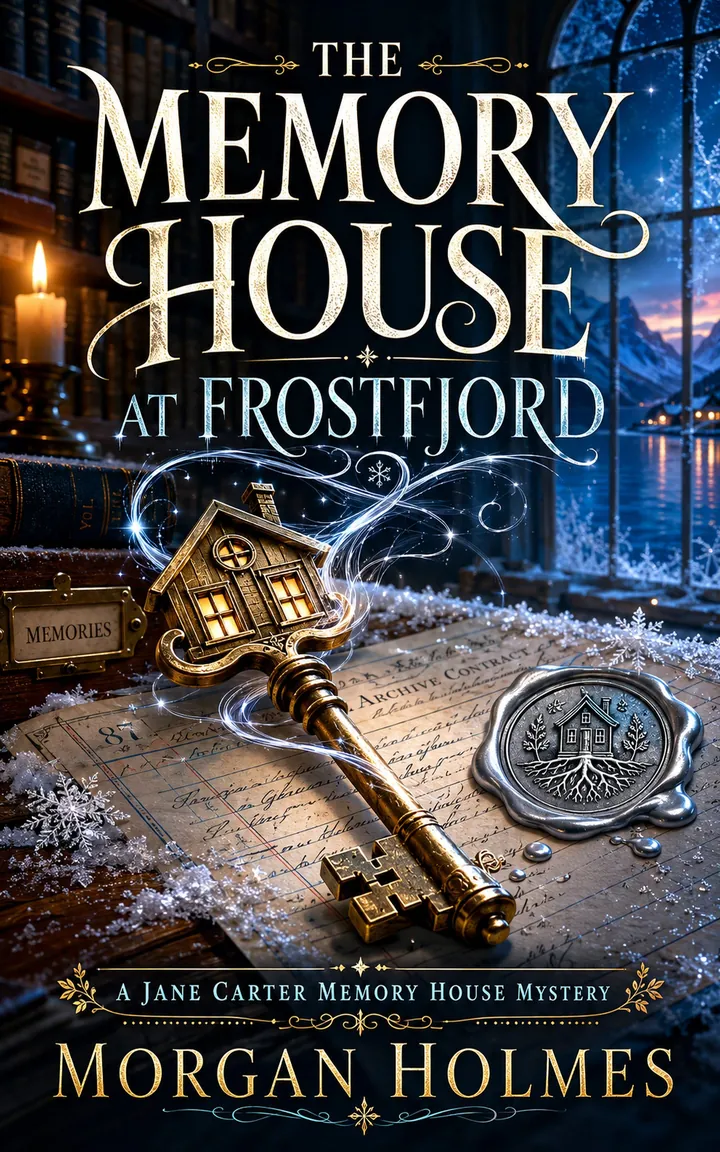
She turned the envelope over. There was no return address. The flap was sealed with a circle of silver wax impressed with a shape that might have been a house, if houses grew roots.
"Courier ID?"
"No badge," Michael said. "Young guy. Very clean shoes. Terrified of your doorman."
"Everyone is terrified of Mr. Alvarez. It is his only hobby."
Jane slipped a letter opener under the flap. The wax cracked with a small, dry sound. Inside were eight pages, a business card, and a photograph.
She read the first page once. Then she read it again, slower.
"Well?" Michael prompted.
"Private security audit. Residential estate. Norway."
He sat up. "Norway as in fjords and sweaters Norway, or Norway as in somebody has a bunker and an opinion about governments Norway?"
"Frostfjord House," Jane said. "Privately owned autonomous estate and guest residence. The client wants a physical security review, staff protocol assessment, archive-access mapping, and a vulnerability report on internal surveillance."
"That sounds almost normal."
"No outside team. No remote access. No subcontractors. Total confidentiality. Personal attendance required for ten days."
Michael's eyebrows drew together. "Less normal."
Jane continued reading. The letter was signed by Victoria Varg, in a hand that matched the envelope. The language was precise, old-fashioned, and expensive. It offered a fee large enough to make Jane's practical brain sit up and take notes while the rest of her became suspicious.
"She wants me there next week."
"Who is she?"
Jane slid the business card across the table. It was matte black, embossed only with a name and an email address.
VICTORIA VARG FROSTFJORD HOUSE
Michael picked it up by the corners. "Very villainous. Stylishly villainous, but still."
"We do not convict on typography."
"You do a little."
Jane ignored him because he was right. She unfolded the photograph. It showed a house crouched at the edge of a dark fjord beneath a pale sky. Snow pressed against its steep roof and gathered on the shoulders of chimneys. Yellow windows burned in the dusk. Behind it rose black pines and the first brutal lift of mountains. The house was large, old, and somehow attentive.
She had audited server farms, hotel towers, private collections, data vaults, one Caribbean compound belonging to a man who referred to himself exclusively in the third person. Buildings, in Jane's experience, gave themselves away. They showed the anxiety of the person who had built or bought them. They revealed whether fear was performative, practical, or pathological.
Frostfjord House did not look afraid.
It looked as if it was waiting for something to arrive.
"Jane," Michael said softly.
She looked up.
"You made that face."
"I have several faces."
"The one where you are already measuring the windows."
She placed the photograph flat on the table and weighed one corner with her coffee mug. "The terms are odd, but not impossible. Wealthy private owners often dislike outside teams."
"Wealthy private owners also dislike witnesses."
"That is why contracts exist."
"That is adorable," Michael said. "The woman with three emergency lock picks in her cosmetics bag believes in contracts."
Jane did not smile, though she wanted to. "Two lock picks. The third item is a tension wrench."
"Romance is alive."
The coffee machine finally surrendered a bitter inch of coffee into her mug. Jane drank it without flinching, which was one of the small private acts of toughness that kept her employed.
She laid the pages in order. There was a preliminary property map attached, printed in clean architectural lines. Main residence. South guest wing. Winter garden. Library. Kitchens. Staff quarters. Boat house. Service tunnel. North archive.